








































































































Blockchain technology has revolutionized the digital landscape, serving as the foundational technology for cryptocurrencies and expanding its use cases far beyond digital currencies. As a decentralized, secure, and transparent ledger system, blockchain allows for peer-to-peer transactions without the need for intermediaries like banks. It’s not only powering cryptocurrencies like Bitcoin and Ethereum but is also being adopted across industries such as healthcare, finance, and supply chain management. This guide will explore the basics of blockchain technology, its security features, and its applications across various sectors.
What is Blockchain Technology?
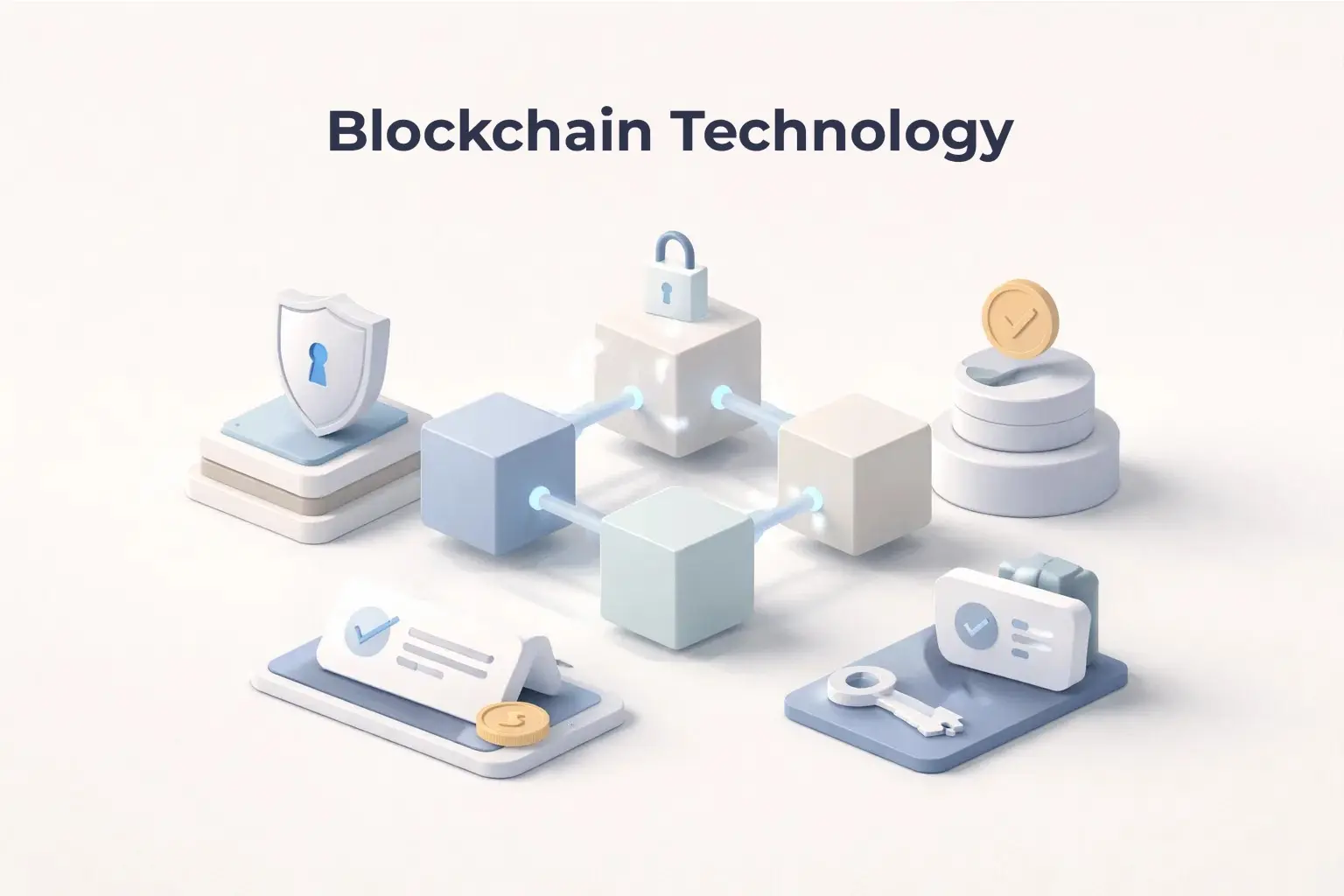
At its core, blockchain is a distributed ledger technology that records transactions across a network of computers, or nodes, in a secure and transparent way. Each transaction is stored in a “block” and added to a chain of previous transactions, hence the term blockchain. One of the key features of blockchain is its decentralization, meaning no single entity controls the ledger. Instead, the system is maintained by multiple participants who validate transactions through consensus mechanisms such as Proof of Work (PoW) or Proof of Stake (PoS).
Blockchain’s decentralized nature eliminates the need for intermediaries, making it ideal for peer-to-peer transactions. Whether it’s sending cryptocurrency, verifying a contract, or recording data, blockchain ensures that every transaction is securely verified and permanently recorded. This has made blockchain technology a game-changer in industries that require trust, transparency, and security.
Blockchain Security Features
Blockchain security is one of the reasons it has gained so much attention. The technology relies on cryptographic hashing and decentralized consensus mechanisms to ensure the integrity and security of the data stored in its ledger. Cryptographic hashing means that every block contains a unique fingerprint, or hash, that identifies it. Altering any data within a block would require changing the hash, which is computationally difficult because it would also require altering all subsequent blocks on the chain.
Blockchain’s distributed nature adds another layer of security. Since the blockchain ledger is shared across multiple nodes, there is no single point of failure. To tamper with the blockchain, an attacker would need to gain control of more than 50% of the network's computing power, a feat that is nearly impossible in large, well-established blockchains like Bitcoin or Ethereum. This robust security architecture makes blockchain highly resistant to fraud, tampering, and hacking.
Additionally, blockchain employs a public and private key system, where users have private keys that allow them to sign transactions securely, while the public key can be shared to verify that the transaction was signed by the correct individual. This system ensures that only authorized users can initiate transactions while allowing public verification.
Smart Contracts
Smart contracts are one of the most exciting applications of blockchain technology. These are self-executing contracts with the terms of the agreement written directly into lines of code. They automatically execute and enforce the agreement when predetermined conditions are met, eliminating the need for intermediaries such as lawyers or escrow services. By leveraging blockchain’s security and transparency, smart contracts reduce the risk of fraud and make transactions more efficient.
Smart contracts are particularly useful in decentralized finance (DeFi), where they are used to automate financial services like lending, borrowing, and trading. They are also increasingly being used in industries such as real estate, supply chain management, and healthcare to streamline contract execution and reduce costs.
Blockchain Applications Beyond Cryptocurrency
While blockchain technology gained prominence through its association with cryptocurrencies like Bitcoin and Ethereum, its potential applications extend far beyond digital currency. Blockchain is now being adopted in various industries to improve transparency, security, and efficiency.
Blockchain in Healthcare and Finance
In healthcare, blockchain is used to create secure and immutable records for patient data, ensuring privacy while enabling data sharing between healthcare providers. This not only improves patient care but also reduces the risk of data breaches.
In finance, blockchain is revolutionizing cross-border payments by reducing transaction fees and processing times. Traditionally, international payments could take several days to settle and incur high fees due to the involvement of multiple intermediaries. Blockchain enables real-time payments with minimal fees, making it a game-changer for global finance.
Blockchain in Supply Chain Management
Blockchain technology is also transforming supply chain management by providing an immutable and transparent record of every step in the supply chain. From the sourcing of raw materials to the delivery of the final product, blockchain ensures that every transaction is recorded and verifiable. This not only enhances transparency but also helps prevent fraud and counterfeiting, particularly in industries like food, pharmaceuticals, and luxury goods.
Decentralized Finance (DeFi)
Decentralized Finance (DeFi) is a sector that has seen explosive growth thanks to blockchain technology. DeFi platforms offer a wide range of financial services—such as lending, borrowing, and trading—without the need for traditional intermediaries like banks. These platforms operate on blockchain networks and use smart contracts to automate transactions, making financial services more accessible, transparent, and secure.
DeFi Lending and Staking Platforms
DeFi lending platforms allow users to lend their cryptocurrency to others and earn interest in return. Similarly, staking platforms enable users to lock up their cryptocurrencies to help secure a blockchain network, earning rewards for their participation. Both lending and staking are becoming increasingly popular as users seek to maximize the returns on their crypto assets. These DeFi platforms are powered by blockchain technology, which ensures the transparency and security of all transactions.
Blockchain Advancements in Technology
As blockchain technology continues to evolve, new advancements are being made to improve its scalability, efficiency, and security. For instance, Layer 2 solutions like the Lightning Network for Bitcoin or rollups for Ethereum are designed to increase the number of transactions that can be processed without compromising security. These technologies aim to solve blockchain’s scalability issue, enabling faster and cheaper transactions.
Cross-chain interoperability is another area of innovation. As more blockchain networks emerge, there is a growing need for them to interact with each other. Cross-chain technology allows different blockchains to communicate and transfer assets between one another, broadening the scope and utility of blockchain applications.
The Future of Blockchain Technology
The future of blockchain is promising, with the technology set to disrupt industries far beyond cryptocurrency. As scalability and efficiency improve, we can expect blockchain to play a significant role in sectors such as healthcare, finance, supply chain, and decentralized finance (DeFi). Moreover, as regulatory clarity improves, the widespread adoption of blockchain could reshape how we think about trust, transparency, and security in the digital world.
The ongoing development of blockchain technology also points toward further decentralization, with an increasing number of applications being built on decentralized networks rather than centralized platforms. This trend is likely to continue as blockchain becomes more integrated into everyday life, providing users with more control over their data and assets.
Conclusion
Blockchain technology is not just the foundation of cryptocurrencies; it is a powerful tool that is reshaping industries by offering unparalleled security, transparency, and efficiency. From its security features to its wide-ranging applications in sectors like healthcare, finance, and supply chain management, blockchain's potential is vast. As advancements in blockchain technology continue to emerge, the world will likely see even more innovative uses of this transformative technology.
FAQs
What is blockchain technology in simple terms?
Blockchain is a decentralized digital ledger that records transactions across multiple computers. Each transaction is stored in a “block,” and these blocks are linked together in a chain. Because it is shared across a network, no single authority controls it, making it transparent, secure, and resistant to tampering.
How does blockchain ensure security?
Blockchain uses cryptographic hashing, consensus mechanisms (like Proof of Work or Proof of Stake), and decentralization to secure data. Each block is linked to the previous one, so altering any information would require changing the entire chain across most of the network, which is nearly impossible in large blockchains.
What are smart contracts and why are they important?
Smart contracts are self-executing programs stored on a blockchain that automatically carry out actions when predefined conditions are met. They remove the need for intermediaries, reduce costs, and increase efficiency in areas like finance, real estate, and supply chain management.
Besides cryptocurrency, where is blockchain used?
Blockchain is used in many industries including healthcare (secure patient records), finance (faster cross-border payments), supply chains (tracking goods transparently), and decentralized finance (DeFi), where it powers lending, borrowing, and trading without traditional banks.

Jake Robins
Jake Robins is a Forex and cryptocurrency education contributor with over 10 years of experience helping readers better understand the financial markets. His work covers risk management, technical analysis, trading psychology, broker platforms, and scam awareness. Through clear, practical guidance, Jake helps traders approach the markets with greater discipline, caution, and confidence.