





For South Korean residents, legal access matters more than an offshore broker's spread or leverage. The Bank of Korea’s FX margin trading FAQ says a resident individual cannot conduct FX margin trading directly through an overseas futures firm without a domestic investment intermediary. Korea Financial Investment Association’s investor guidance likewise directs traders to authorised local intermediaries. As a result, the brokers previously featured on this page should not be presented as approved direct FX margin trading options for residents of South Korea.
FBS in particular should not be a top pick for this audience. The Belize contracting company, FBS Markets Inc., excludes South Korean citizens and residents under its August 2026 agreement. Another company using the FBS brand does not automatically remove that restriction or establish authority to serve Korean residents. This guide explains the restriction, examines the former broker list and shows how to assess a lawful route to the market.
Review update
What's New Since Our Last Update
The previous version ranked seven international brokers primarily by trading features. This revision puts South Korean law and the actual contracting company before product comparisons.
- FBS removed as a South Korea recommendation: the published terms of FBS Markets Inc. expressly exclude South Korean citizens and residents.
- Local rules added: Bank of Korea and Korean investment-industry guidance distinguish authorised domestic intermediation from direct offshore FX margin accounts.
- Former shortlist reassessed: broker websites, Korean-language pages and overseas licences are no longer treated as proof of lawful local availability.
- Comparison method revised: a domestic authorisation check, contracting entity, real round-trip costs and funding restrictions now come before leverage, bonuses or platform choice.
Can residents of South Korea legally trade forex on margin?
South Korea regulates FX margin trading differently from a simple currency exchange at a bank. The Bank of Korea explains that individual residents using foreign financial institutions for FX margin transactions must go through a domestic investment intermediary; directly placing such trades with an overseas futures provider is not permitted under the arrangement it describes. The official explanation references Article 184 of the Financial Investment Services and Capital Markets Act Enforcement Decree. The KOFIA’s guidance on unlawful FX margin transactions explicitly warns against transactions routed around authorised domestic derivatives intermediaries.
That distinction is essential. Buying travel currency, converting Korean won, trading exchange-listed currency derivatives and opening a retail leveraged forex or CFD account are not interchangeable activities. The rules, permitted products, minimum margins and intermediaries differ. This article focuses on retail FX margin trading rather than ordinary foreign exchange conversion.
In 2026, the first check for a resident choosing a provider is legal authorisation, not a published broker rank. The practical starting point is an authorised domestic investment intermediary that actually provides the relevant product. Check the firm against the KOFIA’s register of regulated financial investment firms, then confirm its specific permission and FX margin offering with the firm. An international group’s overseas regulator or a broker’s willingness to display a South Korea sign-up page is not a substitute for Korean authorisation.
Is FBS available to South Korean traders?
Not through FBS Markets Inc. under its published client agreement. The FBS Markets Inc. Terms and Conditions, clause 1.14 identify the contracting company as FBS Markets Inc., incorporated in Belize, and list South Korea among jurisdictions whose citizens and residents are excluded in clause 1.14. This is a restriction on the identified legal entity, not a conclusion about every company that uses the FBS name.
FBS is also used by Tradestone Ltd in Europe. The FBS Europe’s regulation page identifies Tradestone as a Cyprus-regulated investment firm operating the European brand. Its Cyprus authorisation does not establish that it can lawfully onboard a resident of South Korea for direct leveraged FX trading. No verified South Korea-specific contracting entity and lawful onboarding route support reinstating FBS as a recommendation here.
Our assessment: exclude FBS from the recommended shortlist for South Korean residents. Claims about leverage up to 1:3000, very small deposits or MetaTrader access do not overcome an explicit residence and citizenship exclusion. A reader outside South Korea must instead examine their own residence, citizenship, applicable entity, agreement and product permission; that is a separate assessment.
Seven global brokers previously listed: South Korea eligibility check
The following is a status comparison, not a ranking of brokers available for direct FX margin trading in South Korea. None is verified here as an authorised domestic intermediary for that activity. Product details explain why a name may appear on international lists; they do not establish lawful Korean onboarding.
| Broker | What public material establishes | Assessment for a South Korean resident |
|---|---|---|
| FBS | Belize FBS Markets Inc. agreement excludes South Korean citizens and residents. | Exclude. Explicit restriction for the identified entity; no alternative lawful Korean route verified. |
| BlackBull Markets | Provides a South Korea identity-document page and an international restricted-country list. | Not verified for direct FX margin trading. A country-specific verification page is not a Korean licence. |
| FP Markets | Publishes Standard and Raw pricing models for its international offerings. | Not verified. Confirm contracting entity and any domestic authorised intermediary before considering a product. |
| Tickmill | Operates through distinct firms in the Seychelles, UK, EU and South Africa. | Not verified. Group-wide regulation does not establish local access or equivalent protections. |
| Moneta Markets | Lists several legal entities and offers Standard and Prime pricing models. | Not verified. Korean-language marketing does not confirm which entity serves Korean residents lawfully. |
| N1CM | Identifies a Saint Lucia incorporated company and discloses it is not licensed by the Saint Lucia FSRA. | Not verified. Do not treat corporate incorporation as regulatory approval. |
| FXGlory | Advertises multiple high-leverage and fixed-spread account types. | Not verified. Low advertised deposit requirements and leverage do not answer the local legal question. |
What matters in each former broker comparison?
BlackBull Markets: a Korean verification page is not permission to trade
BlackBull’s South Korea identity-verification page identifies identity and address documents for users selecting South Korea. Its BlackBull’s restricted-country list names North Korea among restricted territories but does not list South Korea in the restriction table. Those facts suggest why traders may encounter BlackBull in global searches. They do not demonstrate that a South Korean resident may lawfully trade leveraged FX directly through BlackBull, or which group company would hold the account.
For cost comparison outside this eligibility issue, the BlackBull’s trading-conditions overview distinguishes a spread-based Standard account from a Prime account that lists $3 per side on $100,000 traded. A $0 opening-deposit requirement does not eliminate spread, commission, swap or funding costs.
FP Markets: check both the legal entity and total trading costs
The FP Markets account comparison lists Standard forex pricing from 1.0 pip without a separate dealing commission and Raw pricing from 0.0 pips with a stated $3 per lot per side. These are advertised entry points, not guaranteed live spreads. A Raw trade incurs the commission even if the quoted spread is temporarily close to zero. Account types and terms may differ by jurisdiction.
The missing question for a South Korean resident is not whether FP Markets supports MetaTrader, cTrader or TradingView. It is whether a Korean-authorised route exists for the intended FX margin transaction. No such route is established by the international account comparison, so FP Markets is not recommended here for direct offshore FX margin trading.
Tickmill: the licence depends on the contracting company
Tickmill’s legal-entity explanation distinguishes Tickmill Ltd in the Seychelles from Tickmill UK Ltd, Tickmill Europe Ltd and Tickmill South Africa (Pty) Ltd. A trader should never assume that the protections associated with one of these companies apply to an account held with another. The Tickmill UK’s trading-cost guide illustrates how spreads and commissions differ between Classic and Raw pricing, but the published UK schedule is not a quote for a South Korean account.
Tickmill remains a name worth understanding in a global price comparison, not an approved South Korea option on the evidence available here.
Moneta Markets: a Korean website is not a Korean authorisation
The Moneta Markets’ entity overview lists companies operating under the brand in South Africa, the UK, Saint Lucia and other jurisdictions. It instructs customers to confirm their account entity with support. Its Moneta Markets’ account descriptions distinguishes a Standard account with costs included in the spread from Prime pricing with a $6 per standard-lot round-turn commission.
Neither a Korean-language interface nor access to MT4 and MT5 establishes local regulatory eligibility. The relevant legal entity and domestic trading route remain unresolved for Korean residents.
N1CM: verify the licence claim before the advertised trading specification
N1CM’s legal and regulatory notice names Number One Capital Markets LTD., incorporated in Saint Lucia, and expressly states that it is not regulated or licensed by Saint Lucia’s Financial Services Regulatory Authority. Its N1CM’s current account-type page currently presents Standard, ECN and Raw Spread accounts, including different deposit tiers from those in the former version of this page. Old minimum-deposit and micro-lot assertions should not be repeated as settled current terms.
A company’s international registration does not resolve Korean law, and a broker with an unclear local authorisation route should not be treated as a suitable account choice simply because its listed minimum deposit is low.
FXGlory: very high leverage is a risk factor, not a suitability score
The FXGlory’s account comparison advertises a Standard fixed-spread account from 2 pips and maximum leverage up to 1:3000, with minimum deposits that vary by platform. An advertised $1 minimum for one setup does not imply that every platform or account can be opened for $1. A two-pip entry spread is also materially wider than many raw-spread starting quotes, although commissions, financing and market conditions must be included for a fair comparison.
No South Korea-specific lawful direct FX margin route is substantiated here. Very high leverage can accelerate losses, particularly when thin margins cause forced liquidation after a relatively small adverse move.
How to choose a forex broker in South Korea
- Identify the transaction. Decide whether you need ordinary currency conversion, a regulated exchange-listed product or FX margin trading. Each carries different rules.
- Verify the Korean intermediary. Start with the KOFIA’s register of regulated financial investment firms and ask the company for the exact legal name, authorisation and permission to offer FX margin transactions. Confirm this independently rather than relying on a logo or overseas licence number.
- Read the customer agreement. Check the name of the entity that would hold your account, what law governs disputes, which institution receives funds and whether the contract excludes your country or citizenship.
- Compare full trade costs. Ask for typical spreads on your intended pair, commissions per side, overnight financing, currency-conversion costs, deposit and withdrawal charges, and required margin. A minimum advertised spread is not an all-in price.
- Inspect margin controls and risk disclosures. Review the initial margin, maintenance level, liquidation procedure, slippage policy and any limits on losses. Do not import protection assumptions from another legal entity or regulator.
- Check funding and withdrawals. Verify that payment routes are lawful, made to the named authorised institution and supported by transparent statements. Avoid third-party personal accounts, informal remittance requests and anyone promising guaranteed returns.
Suppose a permitted intermediary quoted an illustrative EUR/USD spread of 1.0 pip for a standard 100,000 EUR lot. At about $10 per pip, the spread component would be approximately $10, before a separate dealing commission, overnight charges and slippage. With a $3 commission on each side, the illustrative opening-and-closing commission adds $6. These are examples of the calculation, not offers from a South Korean provider. The actual pip value varies with the pair, account currency and contract size.
For novice traders, the most important practical choice is often whether leveraged FX margin is appropriate at all. A lower-leverage, properly authorised alternative or ordinary currency conversion may meet the underlying objective without adding an offshore counterparty and regulatory problem.
What a South Korean trader should do next
Choose a lawful local route before comparing international broker brands. The official Korean guidance is clear about direct overseas FX margin accounts for resident individuals. If a platform proposes bypassing a domestic intermediary, the price or leverage comparison is secondary. Ask an authorised local investment firm which FX margin products it can offer, what the agreement covers and what the complete transaction costs will be.
If a broker claims that a different offshore affiliate can accept South Korean residents, request the entity’s exact name and written regulatory basis. That claim must satisfy both the broker’s onboarding terms and Korean requirements; it cannot be inferred from a translated page, an app country selector or another entity’s overseas licence. This article does not verify any of the seven previously featured international brands as a locally authorised direct FX margin provider.
Risk warning: Leveraged FX margin and CFD positions can lose money rapidly. Spread changes, slippage, overnight financing and forced liquidation can amplify losses. Offshore registration is not Korean regulatory authorisation, and financial protections depend on the contracting entity and applicable rules. Never fund a margin account that is restricted by its terms or that bypasses required domestic intermediation.
FAQs
What is the best forex broker for a resident of South Korea?
The appropriate starting point is an authorised domestic investment intermediary that actually offers permitted FX margin trading. Check its status through the Korea Financial Investment Association and compare the authorised product and fees. This page does not rank any offshore platform as a lawful direct FX margin broker for residents.
Can South Korean residents open an FBS account?
FBS Markets Inc., the Belize company named in the FBS client agreement, excludes South Korean citizens and residents in clause 1.14. A separate FBS-branded company does not automatically make a Korean account available or lawful. FBS is therefore not a recommended direct FX margin option on this page.
Is FBS regulated in South Korea?
No Korean authorisation for FBS to provide the FX margin service discussed here was established. Its Belize company describes Belize oversight, while the separate Tradestone entity describes Cyprus regulation. Neither by itself is proof of permission to serve Korean residents.
Can residents use an offshore forex broker directly from South Korea?
The Bank of Korea explains that individual residents cannot conduct FX margin transactions directly with overseas futures firms without a domestic investment intermediary. Obtain confirmation from an authorised Korean intermediary for the intended product and arrangement before opening or funding an account.
Does a broker having a Korean website mean it accepts Korean residents legally?
No. A language option, local identity-document page or selectable country can describe a website or verification workflow without proving a lawful trading service. The contracting entity, its country exclusions and local authorisation must be checked separately.
Are BlackBull Markets, FP Markets or Tickmill approved for Korean FX margin trading?
The public international pages discussed here do not establish those companies as authorised domestic FX margin intermediaries for South Korean residents. Their global trading terms may be relevant outside Korea, but should not be taken as confirmation of legal direct offshore access.
Which fees matter for an FX margin account?
Compare the typical bid-ask spread, per-side commissions, overnight financing or swaps, currency conversion, deposits and withdrawals, and the initial and maintenance margin. Use the exact schedule for the entity and product an authorised local intermediary offers.
Where can traders verify a Korean financial investment firm’s authorisation?
Use the Korea Financial Investment Association’s regulated financial investment firm lookup, then confirm that the specific firm may provide the FX margin product you want. An ordinary corporate registration or a licence issued in another country is not equivalent.
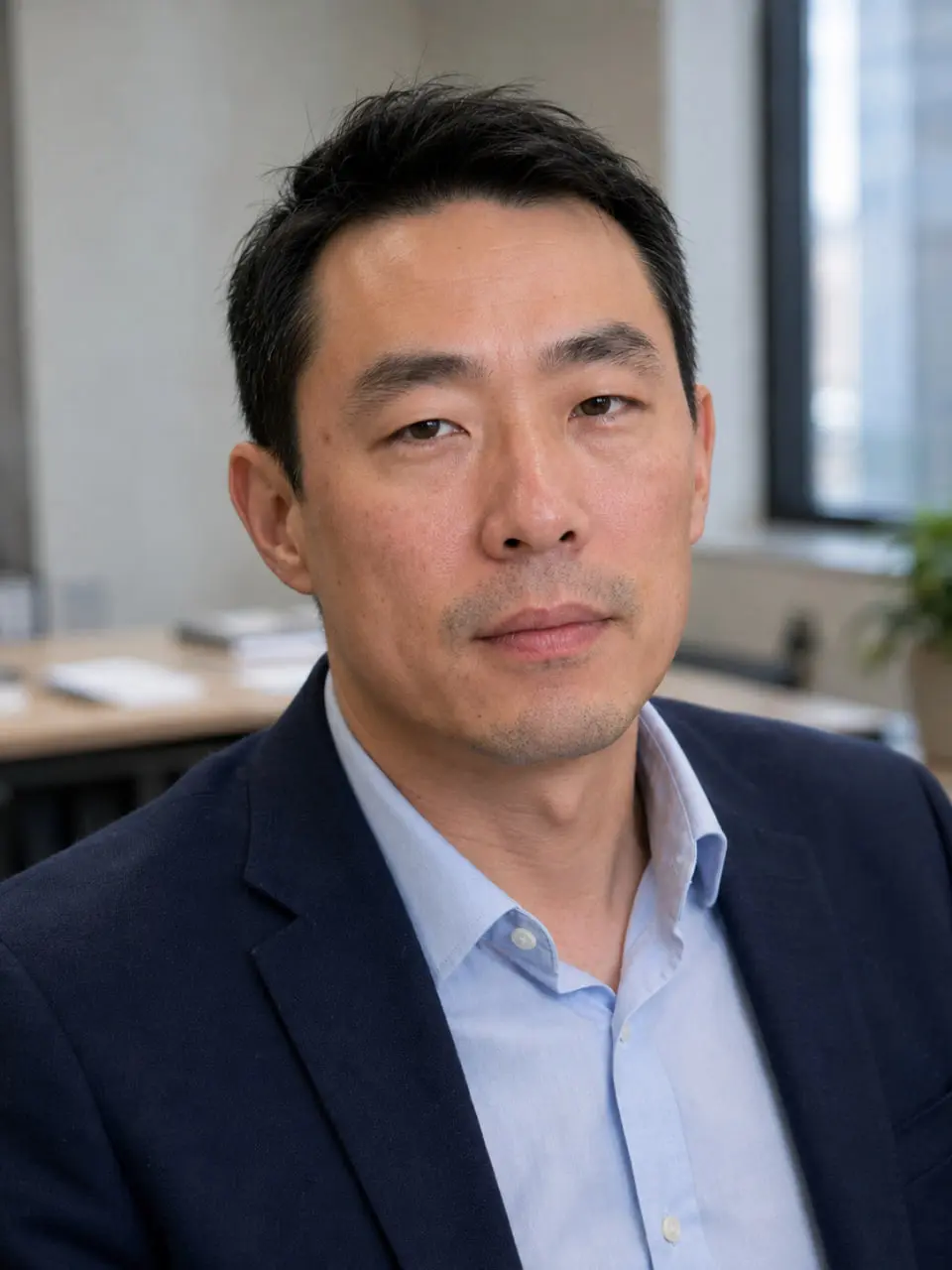
Nathan Wong
Nathan Wong is a Forex education contributor with 15 years of trading and market-analysis experience. He specializes in broker platforms, cryptocurrency, risk management, and trading psychology, creating practical content that helps readers make informed decisions and develop realistic expectations.