



























































































































What Is the Asian Forex Trading Session?
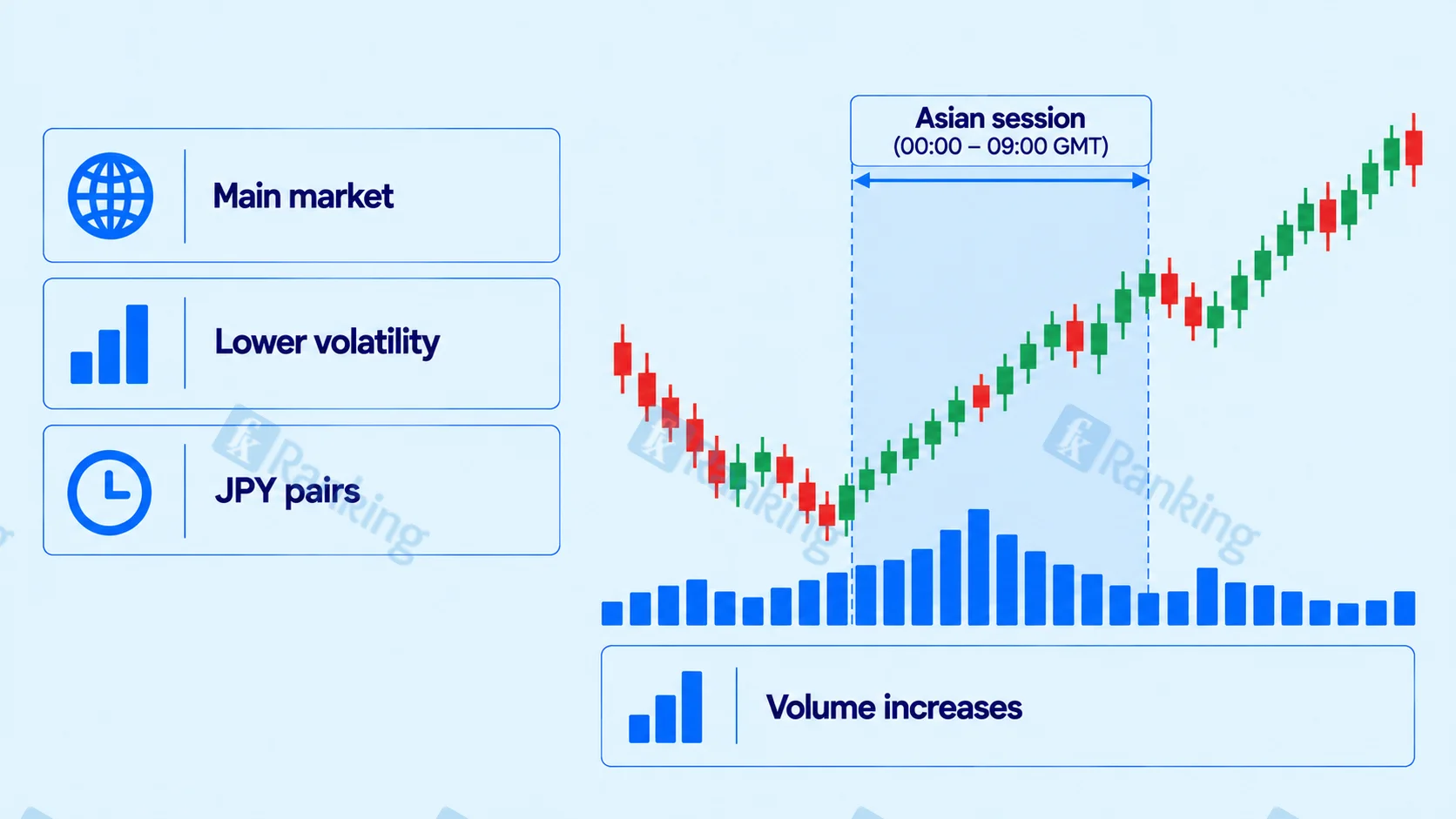
The foreign exchange market operates around the clock during the working week because trading passes between financial centers as one region closes and another opens.
The Asian trading period is commonly associated with financial centers including Tokyo, Singapore, Hong Kong and Sydney.
Tokyo is especially important because Japan has one of the world's major currencies. The Japanese yen accounted for 16.8% of global FX turnover in the Bank for International Settlements' 2025 survey, while the US dollar appeared on one side of 89.2% of transactions. USD/JPY alone represented 14.3% of measured global FX turnover.
The term Asian session does not have one universally fixed definition across every broker and charting platform. Traders often treat the Tokyo session, together with the preceding Sydney hours and activity from Singapore and Hong Kong, as the broader Asia-Pacific trading period.
Tokyo itself does not observe daylight saving time, but Sydney does. That means traders should verify session times on their own trading platform rather than assuming that every published session table remains accurate throughout the year.
Why Trading Sessions Matter
Forex may trade 24 hours a day, but activity is not distributed evenly.
When financial institutions, companies, hedge funds and other market participants in a particular region are active, currencies connected with that region may experience greater order flow.
During Asian hours, traders therefore tend to pay particular attention to:
- Japanese yen pairs
- Australian dollar pairs
- New Zealand dollar pairs
- Chinese yuan-related markets
- Singapore dollar and other regional Asian currencies
European currencies such as EUR and GBP still trade during this period, but their largest centers are not yet fully active during much of the Asian session.
Best Forex Pairs for the Asian Session
For most retail traders, the most practical Asian session pairs combine regional relevance with reasonable liquidity.
| Currency Pair | Why Traders Watch It During Asia | Typical Consideration |
|---|---|---|
| USD/JPY | Strong connection to Japan and high global trading activity | Sensitive to Japanese and US rates |
| AUD/USD | Australian data often arrives during Asia-Pacific hours | Sensitive to commodities and China-related developments |
| NZD/USD | New Zealand economic releases occur during this period | Can have lower liquidity than AUD/USD |
| AUD/JPY | Combines two major Asia-Pacific currencies | Can react strongly to shifts in market sentiment |
| NZD/JPY | Exposure to New Zealand and Japan | Often more volatile and less liquid than USD/JPY |
| AUD/NZD | Both economies are active in the regional session | Often used for relative Australia/New Zealand views |
| USD/CNH | Important for China-related developments | Trading characteristics differ from major currency pairs |
Note: These are not recommendations to buy or sell. They are simply pairs that traders commonly monitor because their underlying currencies are closely connected with the Asia-Pacific trading day.
1. USD/JPY
For many traders, USD/JPY is the first pair to consider when looking for the best forex pair to trade during the Asian session.
It combines the US dollar, the dominant currency in global foreign exchange, with the Japanese yen, one of the world's most actively traded currencies.
Why USD/JPY Can Be Active
USD/JPY may respond to:
- Bank of Japan policy decisions
- Japanese inflation figures
- Wage data
- Japanese GDP
- Government bond yields
- US Treasury yields
- Federal Reserve expectations
- Intervention-related comments from Japanese authorities
Interest-rate expectations are particularly important.
Suppose US bond yields rise while Japanese yields remain comparatively stable. Traders may become more willing to hold dollars relative to yen, potentially supporting USD/JPY.
That is an economic relationship rather than a guaranteed trading rule. Many other factors can influence the pair simultaneously.
2. AUD/USD
AUD/USD is another widely followed choice among forex Asian session pairs.
Australia is one of the first major developed economies to become active during the global trading day, and important Australian economic statistics are often released during Asia-Pacific hours.
What Moves AUD/USD?
- Reserve Bank of Australia decisions
- Australian employment reports
- Inflation data
- Commodity prices
- Developments in China's economy
- US dollar movements
- Global risk sentiment
Australia is a significant commodity-exporting economy, and China is an important destination for Australian exports. For that reason, major changes in Chinese economic expectations can influence sentiment toward the Australian dollar.
That relationship should not be interpreted mechanically. A stronger Chinese data release does not mean AUD/USD must rise.
AUD/USD may be particularly worth watching when Australian economic data is scheduled.
Instead of trading simply because the Asian session has begun, experienced traders often ask: Is there a reason for this pair to move today?
3. NZD/USD
NZD/USD shares several characteristics with AUD/USD but generally attracts less global trading volume.
NZD/USD can become active around:
- Reserve Bank of New Zealand decisions
- New Zealand inflation figures
- Employment statistics
- Dairy-sector developments
- Chinese economic news
- Changes in global risk appetite
Because liquidity can sometimes be thinner than in larger major pairs, short-term traders should pay particular attention to spreads.
A movement that appears attractive on a chart may be much less attractive after transaction costs are considered.
4. AUD/JPY
AUD/JPY combines two important Asia-Pacific currencies and can be particularly relevant during the Asian trading session.
It can become active around:
- Australian economic data
- Reserve Bank of Australia decisions
- Bank of Japan policy decisions
- Japanese economic releases
- Commodity price movements
- Changes in global risk sentiment
The pair can also be influenced by differences in interest-rate expectations between Australia and Japan. Broader market sentiment may also affect AUD/JPY, as the Australian dollar is often sensitive to growth expectations while the Japanese yen can attract demand during periods of market stress.
Because AUD/JPY can experience sharper price movements than some major currency pairs, traders should pay attention to volatility, spreads and position size.
A movement that appears attractive on a chart may carry greater risk if volatility increases unexpectedly.
5. AUD/NZD
AUD/NZD is a regional currency pair that compares the Australian dollar directly with the New Zealand dollar, without involving the US dollar.
AUD/NZD can become active around:
- Reserve Bank of Australia decisions
- Reserve Bank of New Zealand decisions
- Australian economic data
- New Zealand economic data
- Commodity price movements
- Changes in global risk sentiment
The pair is particularly sensitive to differences in monetary policy and economic expectations between Australia and New Zealand. For example, a change in interest-rate expectations in one country can influence the relative strength of its currency.
Because AUD/NZD is influenced by two closely connected economies, price movements can sometimes be less pronounced than in more volatile major pairs.
6. USD/CNH
USD/CNH is increasingly relevant for traders following developments in China.
CNH refers to the offshore Chinese yuan. It differs from CNY, which is the yuan traded in mainland China's onshore market under a more controlled framework.
USD/CNH can react to:
- Chinese economic releases
- People's Bank of China policy
- Yuan fixing expectations
- Trade developments
- Property-sector news
- Geopolitical developments
- Movements in the US dollar
However, USD/CNH does not behave exactly like freely floating major pairs such as EUR/USD. Beginners should understand its market structure before trading it.
How Volatility Changes During the Asian Session
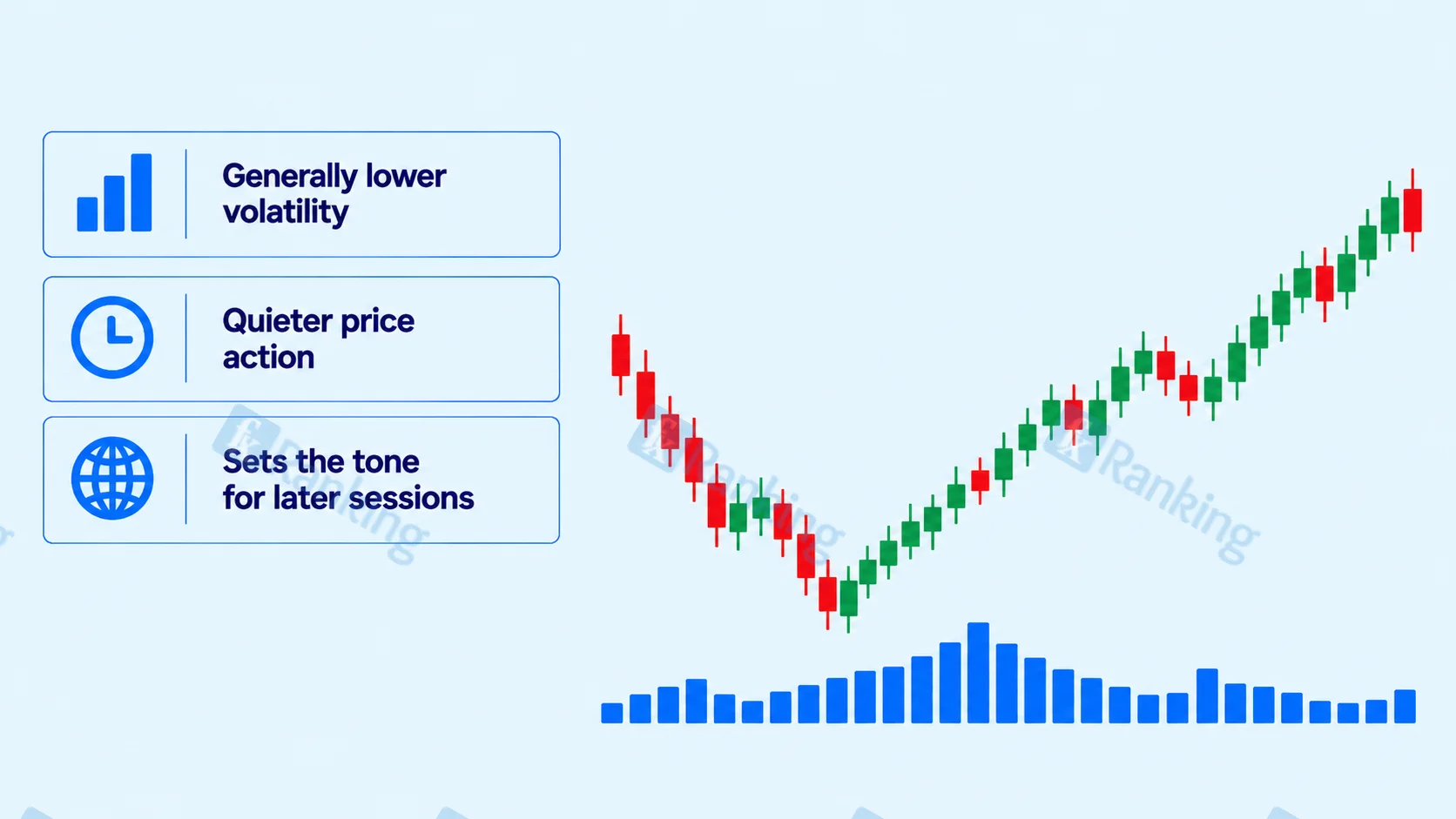
One common misconception is that the Asian session is always quiet.
It is often quieter for certain European and North American currency pairs, but that does not mean volatility is always low.
A normal session may produce relatively narrow ranges until an important announcement suddenly creates rapid movement.
Volatility could increase significantly following:
- A Bank of Japan policy announcement
- Australian employment data
- A Reserve Bank of Australia decision
- Chinese economic data
- An unexpected geopolitical development
The correct lesson is not that the Asian session is "low volatility." It is that volatility depends heavily on the pair, time and catalyst being traded.
How Traders Use Asian Session Forex Pairs
Range Trading
When markets are relatively calm, prices may repeatedly move between identifiable support and resistance areas.
Suppose AUD/USD has traded between 0.6540 support and 0.6570 resistance for several hours.
A range trader may look for signs that price is rejecting one of these boundaries.
The danger is that ranges eventually break. A major economic announcement can turn a quiet 30-pip range into a much larger directional move.
Breakout Trading
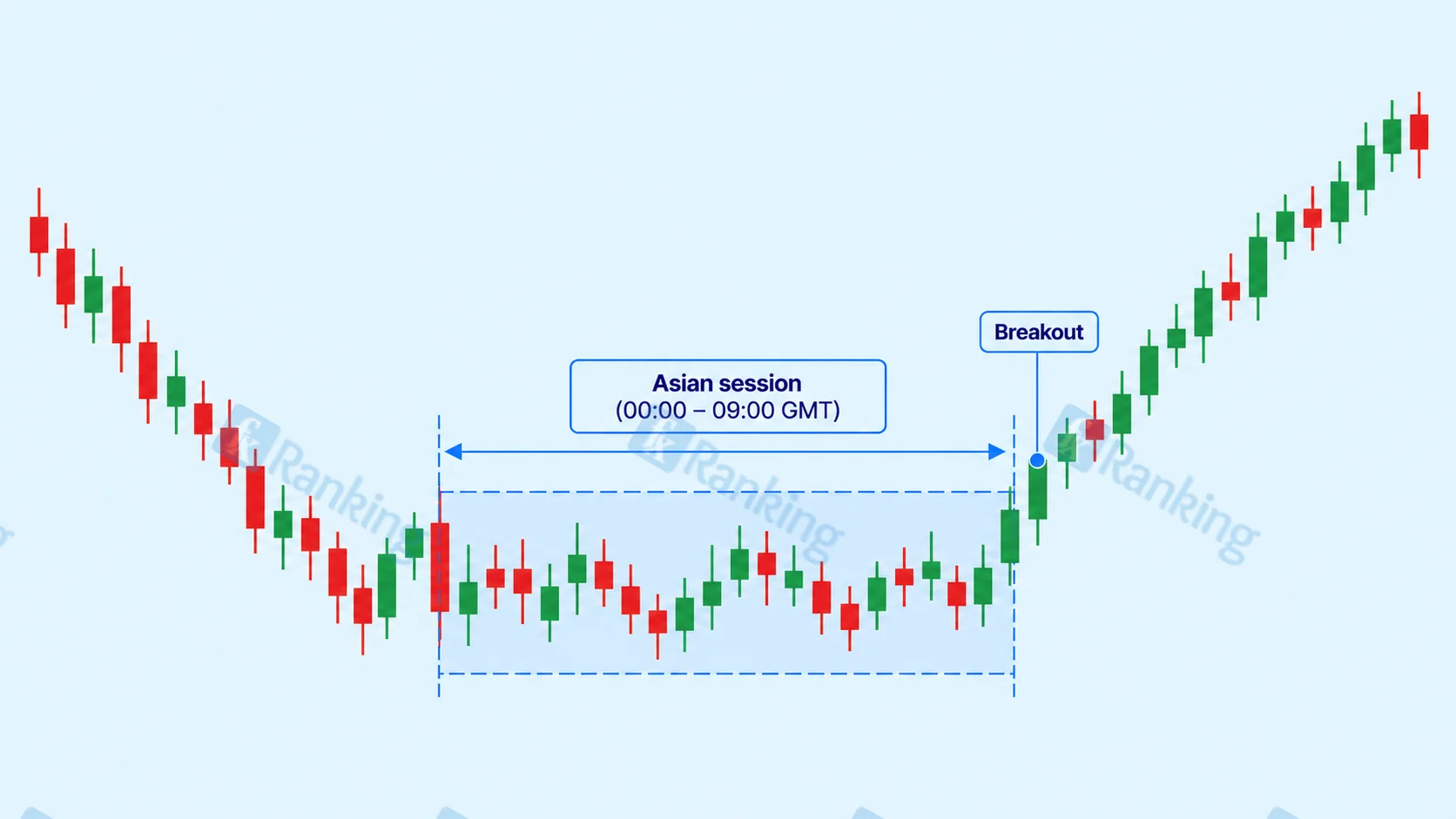
Other traders deliberately look for price to escape a narrow Asian range.
Some traders mark the Asian session high and Asian session low, then monitor whether price breaks either boundary as London becomes active.
A break alone does not guarantee continuation. False breakouts are common.
News Trading
Asia-Pacific economic releases can generate immediate volatility.
A trader following AUD/USD, for example, might monitor an Australian inflation report.
Professional traders look beyond the headline number. Previous revisions, underlying inflation measures and central-bank expectations may matter just as much.
Trend Continuation
Not every Asian trade begins in Asia.
A trend that developed during the previous New York session may continue after the Asian market becomes active.
Traders may therefore assess the broader daily and four-hour trend before making decisions from a shorter-term chart.
What Makes a Forex Pair Suitable for the Asian Session?
1. Liquidity
Liquidity describes how easily a market can absorb transactions without large price disruptions.
2. Volatility
Volatility describes the magnitude and speed of price movement.
3. Economic Calendar
A technically attractive setup can change instantly when important economic news is released.
4. Trading Costs
Spread and commission matter particularly when targeting relatively small intraday moves.
Common Mistakes When Trading the Asian Session
Assuming Every Yen Pair Will Be Active
JPY involvement does not guarantee strong movement.
Trading Every Breakout
Asian session ranges can produce false breaks.
Ignoring Economic Releases
A technically attractive chart setup may become far more volatile when economic data arrives.
Using the Same Stop-Loss Distance on Every Pair
Stops should relate to market structure, volatility and the trader's predefined risk.
Confusing Low Volatility With Low Risk
Unexpected central-bank headlines, geopolitical developments or economic surprises can create rapid moves and slippage.
Choosing a Pair Purely Because of the Session
Session timing is only one part of pair selection.
Advantages of Trading During the Asian Session
- Direct exposure to Japanese, Australian and New Zealand economic releases
- Relatively orderly price ranges on some days
- Opportunities in regional currency pairs
- Potential range setups
- Potential breakouts as later sessions approach
Limitations and Risks
- Some non-Asian pairs may experience lower activity, and spreads can occasionally be less attractive than during peak trading periods.
- Large orders or unexpected news can produce disproportionately strong moves when liquidity is thinner.
- Historical behaviour does not mean a pair will behave the same way tomorrow. Volatility patterns, monetary policy regimes and correlations change.
- Forex trading itself also involves leverage. Leverage allows traders to control positions substantially larger than their deposited capital, which magnifies both gains and losses.
Best Forex Pairs to Trade During the Asian Session: Key Takeaways
- USD/JPY is one of the most important Asian-session pairs because of its connection to Japan and substantial global liquidity.
- AUD/USD is widely followed during Australian economic releases.
- NZD/USD can become active around New Zealand economic and central-bank news.
- AUD/JPY provides exposure to two important Asia-Pacific currencies.
- AUD/NZD can help traders express differences between Australian and New Zealand economic expectations.
- USD/CNH is relevant for China-focused trading but has a distinctive market structure.
- Session timing alone does not make a trade attractive.
- The "best" pair changes with market conditions and the trader's strategy.
Conclusion
The best forex pairs for the Asian session are usually those connected directly with the economies active during Asia-Pacific trading hours.
USD/JPY, AUD/USD and NZD/USD are natural starting points for many retail traders, while AUD/JPY, AUD/NZD and USD/CNH can provide additional opportunities for traders who understand their characteristics.
Rather than searching for one universally superior Asian session forex pair, traders should focus on liquidity, current volatility, scheduled economic events and trading costs.
A good pair is not simply one that moves. It is one whose behavior fits the trader's strategy, risk tolerance and trading plan.
FAQs
What are the best forex pairs to trade during the Asian session?
USD/JPY, AUD/USD and NZD/USD are among the most commonly watched pairs, while AUD/JPY, AUD/NZD and USD/CNH can also attract attention.
Is USD/JPY good for the Asian session?
Yes. USD/JPY is closely connected to Japan's financial markets and can become active around Japanese economic data and Bank of Japan decisions.
Is the Asian session good for forex trading?
It can be. Opportunities depend on liquidity, volatility, economic news and the trading strategy being used.
What is the best currency pair for the Asian session?
USD/JPY is one of the most closely watched pairs during the Asian session because of its connection to Japan and the yen.
Is the Asian forex session volatile?
Volatility varies. Some sessions are relatively quiet, while major economic releases or unexpected news can cause sharp price movements.
What should I look for when choosing an Asian session forex pair?
Consider liquidity, volatility, spreads, economic news and whether the pair's characteristics suit your trading strategy.

Chad Powell
Chad Powell has spent more than five years trading Forex and cryptocurrency, building a practical understanding of how markets move and the challenges traders face. He writes about technical analysis, risk management, trading discipline, broker platforms, crypto security, and fraud prevention.